


I talked previously about LCRIG’s support for the Transport Technology Forum (TTF) at this year’s ITS World Congress in Dubai. What once seemed a long way off finally arrived a week ago last Friday. Susanne, Kerry, Darren from DfT, and I set off from Manchester Airport for a week packed with UK Pavilion events expertly organised by Kerry. This year, like previous years, LCRIG supported both TTF and DfT in delivering the UK Pavilion by taking a number of SMEs to showcase their products and services on the international stage. You can read about the SMEs who joined us here.
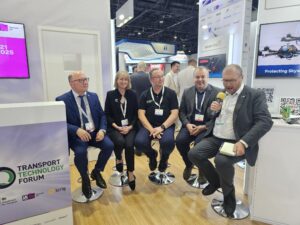 My role at the congress was multi-faceted; I guess you could say I had several very different roles to play. My main purpose was to provide policy support for TTF and DfT. I also wore my LCRIG hat to support SMEs and assist Susanne and Kerry with events held at the Pavilion. In addition, I had a strategic role taking part in a high-level closed summit, a panel discussion with ERTICO CEO, DfT and ERTICO Innovation colleagues on public and private collaboration, and another panel on women in strategic positions. My final role at the congress was as part of a Rapporteur team, attending a range of sessions on urban mobility. Each day, I attended a wide range of presentations covering ITS, mobility technology, and innovation delivered by international experts and leaders in their fields.
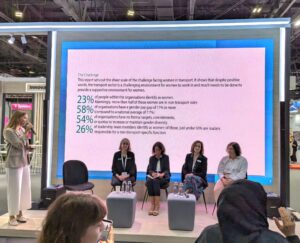 As a rapporteur, I covered sessions around car probe data, crowdsourced data, leveraging and utilising AI, floating bicycle data, equity in traffic management, integration of tunnel ITS, and international perspectives on incident management using technology. I listened to speakers from the US, Australia, Denmark, Dubai, the European Commission, and many other countries. I thoroughly enjoyed speaking with so many international colleagues, both during sessions and on the UK TTF Pavilion, and on some occasions challenging speakers on their perspectives.
If I were to sum up my thoughts from across the few days and the technical sessions I attended, it would be:
- AI still has a long way to go in some areas before it can be considered an additive tool. I saw examples of AI that were not advanced enough to provide much more insights beyond picture-submitted complaints from residents and communities.
- When it comes to international traffic incidents, it was interesting to see that, while incidents can be unique, effective communication is essential to avoid panic, safely direct people away from epicenters of concern, minimise traffic impacts, and to help emergency services get to the right locations – this all requires consistent comms regardless of the nation.
- Floating bicycle data is not yet mature enough for reliable use, without distortions, particularly around gender, and there was some debate about the voluntary nature of data being submitted.
- Equity is still a challenge across many, many countries, and if we are to deliver universal public transport, much, much, more needs to be done.
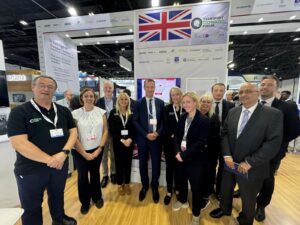 During the week, we were joined by a range of senior DfT colleagues, including the DfT Chief Scientific Advisor and DfT Traffic and Technology colleagues. The UK Pavilion hosted events for the UK Ambassador, royal dignitaries and senior Dubai RTA colleagues, along with a celebration for the World Congress in 2027 in Birmingham.
After a hectic and successful week, it was great to return to a different kind of glitz at the Highways Awards, where we had submitted the successful Highways Apprentice Academy in collaboration with councils, Salford College, and industry businesses. Although we were unsuccessful, we remain proud of our work, and all the submissions in our category were incredibly worthy.
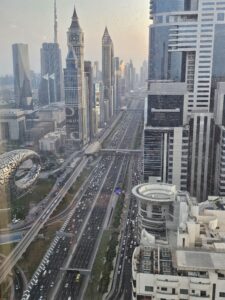 Finally, returning to reflections on Dubai, I had the opportunity to visit the iconic Museum of the Future, which provided much food for thought on the scenarios it showcased for Dubai in 2071.
However, it was the view of traffic from the skyscraper during a Chambers of Commerce reception that had me thinking about congestion and the challenges cities worldwide will face, and the challenges our suppliers and councils will face over the next few decades.
Paula Claytonsmith
CEO