

In this member article, ProDroneWorx explores how the use of confined space drones and remote-controlled survey boats can enable multiple structures to be inspected in a single day, reducing costs, improving safety and supporting more efficient asset management.
The inspection and surveying of structures located over or adjacent to watercourses, such as culverts, bridges, outfalls, headwalls, and drainage assets, has traditionally been a time consuming and costly process.
Conventional inspection techniques often require multiple site visits, specialist access equipment, working at height controls, confined space entry procedures, traffic management, or temporary works. As a result, inspecting several structures across a network can take multiple days to complete and consume a significant portion of maintenance and inspection budgets.
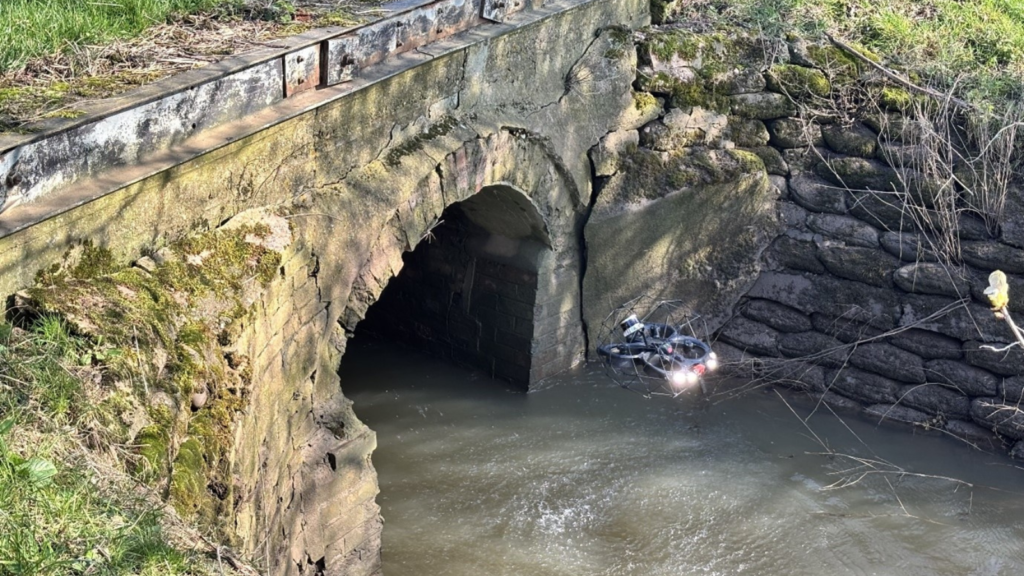
ProDroneWorx recently demonstrated how modern inspection technologies can transform this process by using a combination of confined space drones and remote-controlled survey boats to inspect and survey four small structures in a single day.
The confined space drone was used to inspect difficult-to-access areas such as culverts, bridge soffits, abutments, and internal structural elements where traditional access would have required personnel to work in hazardous environments. Simultaneously, the remote-controlled survey boat provided safe access to water-based assets, capturing high-resolution imagery and survey data from locations that would otherwise require personnel to work in or near water.
The result was a comprehensive inspection of multiple assets within a single mobilisation. Engineers received detailed visual records of structural condition, including defects, deterioration, debris accumulation, cracking, corrosion, and other maintenance concerns. The technologies enabled complete asset coverage while significantly reducing the risks typically associated with working at height, confined spaces, and water environments.
The time savings achieved were substantial. Rather than requiring several days of site attendance, multiple crews, and extensive access arrangements, all four structures were inspected within a single day. This reduced mobilisation costs, minimised disruption to operations, and allowed the client to obtain condition information far more quickly than would have been possible using traditional methods.

The health and safety benefits were equally significant. By removing the need for personnel to enter confined spaces, work above water, or access difficult structural elements directly, the inspection methodology aligned with the hierarchy of controls by eliminating risk wherever possible rather than simply managing it.

Perhaps most importantly, this approach allows clients to make maintenance budgets go further. By reducing access costs, minimising labour requirements, and increasing the number of assets that can be inspected during a single deployment, asset owners can gather more condition data across their networks for the same budget. This enables more informed maintenance planning, better prioritisation of repairs, and a shift towards proactive asset management rather than reactive intervention.

As infrastructure owners face increasing pressure to maintain ageing assets with constrained budgets, the combination of confined space drones and remote-controlled survey vessels provides a safer, faster, and more cost-effective solution for inspecting bridges, culverts, and other water-related structures.
To find out more, please visit www.prodroneworx.co.uk
(Images – ProDroneWorx)