


A recent study by Compass IoT, a connected vehicle data aggregator, shows a significant change in driver behaviour following the installation of a new bike lane. Findings show a decrease in vehicle trips and slower speeds on the street, providing transport authorities valuable insights into how low-carbon initiatives may impact urban planning.
Working with a transport road authority, Compass analysed the effects of a bicycle lane installed in 2024. Using connected vehicle data, they demonstrated how drivers’ route preferences changed before and after the installation.
Following the bike lane installation, vehicle trips on the street reduced across several sections. For one section, prior to the bike lane installation, 2.7% of surrounding trips used the street, afterwards, this number dropped significantly to only 1.1%.
Interestingly, Compass also determined that surrounding roads saw a significant increase in traffic volume during this period. This suggests drivers are potentially avoiding the area, either to bypass the bicycle lane or congestion.
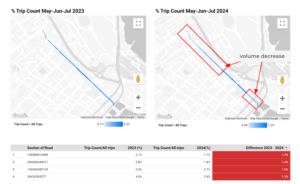
Image: Connected vehicle data showing the reduction of trips from 2023 to 2024.
Vehicle speeds were also impacted. Across all road segments, the 85th percentile speed decreased by 4-6km after the bike lane was installed, potentially indicating that drivers slowed due to the presence of bikes or increased congestion. Additionally, the percentage of harsh braking incidents also increased by up to 5.5% along more than half of the street, indicating riders may be causing disruptions to traffic. The speeds and harsh braking will continue to be monitored closely.
Nick Karahlis, Head of Transport Engineering at Compass IoT shared: “This data analysis showed that the provision of bicycle lanes in the street made it much safer for cyclists and motorists. Reducing the amount of vehicles using the street, provided a safe dedicated lane for cyclists which has contributed to enhanced community health and lifestyle.”
According to the Department for Transport (DfT), in 2023 the average person in England completed 29% of all their trips by walking and 2% by cycling. Active travel is being supported worldwide in a push towards carbon-low transport, with walking and cycling being the most encouraged.
Studies like these by Compass IoT are crucial for understanding the impact on current drivers and potential safety challenges, such as increased congestion and harsh braking.
With connected vehicle data, transport professionals can understand, compare and analyse driver behaviour in reaction to active travel changes on the network in both the short and long term.
Images – Compass IoT