

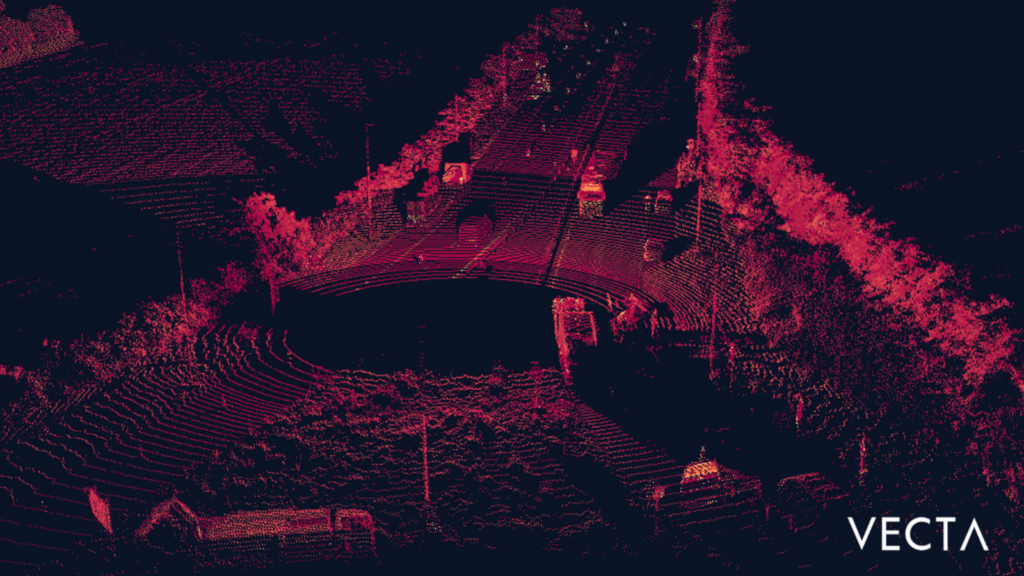
Vecta, a concept that utilised state of the art 3D perception and machine learning to automatically detect hazardous objects on the road, has now become a reality and will be unveiled at Highways UK 2025.
Last year, Roadside Technologies, unveiled its vision for this innovative solution, for faster, hazardous object detection, powered by renewable energy. Vecta is now undergoing testing as a fully-realised product – and ready to prove itself on the network.
Vecta started life through the National Highways Hazard Protection on Roads Accelerator, a programme delivered by Connected Places Catapult that aimed to stimulate innovation around the challenge of further helping to protect road users in England from hazards.
Now in the final stages of data collection and refining, the team at Roadside Technologies are looking forward to deploying units to roadsides, highways and road works throughout the country, continuing their mission to use innovative technology to increase road safety.
Gary Bray, Commercial Director at Roadside Technologies said:
“Vecta represents a major step forward in highway safety. By combining cutting-edge 3D perception with the latest sensor technology, we’re giving operators the tools to respond faster and more effectively to hazards. Our goal has always been simple – to make roads safer for everyone, and Vecta is proof of that commitment.”
Vecta employs advanced sensor technology not yet utilised in this format on the UK highway. These sensors create a 3D image of a wide area, which is analysed to automatically detect and track objects of interest. Once tracked, the system can quickly and accurately determine the objects class, size, speed, position, whether it becomes stationary, and critically, where it becomes stationary (even providing lane discrimination) – enabling quick and efficient deployment of resources.
A supplement to traditional CCTV rather than replacement, Vecta’s detection works faster than the human eye – allowing for full visibility, efficient management, and greater control by operators who have a view of the area through an inbuilt PTZ camera. On top of stopped vehicle detection, Vecta is built to identify people in the road, detect cone line incursions, and monitor traffic flow, along with providing vehicle counting and incident report data. However, the sky’s the limit – and the Roadside Technologies team are already planning for expanded capability in upcoming months.
Managing Director, Chris Moseley said:
“This technology isn’t just about detecting stopped vehicles; it’s about redefining what’s possible on the UK road network. Vecta’s capabilities will continue to grow, and we’re excited to show how innovation can transform safety standards for years to come.”
Vecta will be available for demonstration at Highways UK 2025 NEC Birmingham on 15-16 October, where attendees can witness first-hand how this revolutionary system is set to transform highway safety.
(Image – Roadside Technologies)